 Vital
Needing more light to read, struggling with glare when driving at night, and eyes that feel tired after an hour on a tablet: these are some of the most common changes after 60. Some are a normal part of aging, some are signs of conditions that need treatment, and some respond well to simple habits and good nutrition.
How eyes change with age
- Presbyopia: the lens stiffens, making close-up focus harder. Almost everyone needs reading glasses eventually.
- More light needed: the pupil gets smaller and the lens yellows, so a 60-year-old needs far more light to read than a 20-year-old.
- Glare sensitivity, especially at night.
- Dry eyes: tear production falls, particularly in women after menopause.
- Higher risk of eye diseases such as cataracts, glaucoma and age-related macular degeneration, which often have no early symptoms.
The exam you should not skip
The American Academy of Ophthalmology recommends a comprehensive dilated eye exam every one to two years from age 65, or as your eye doctor advises. Glaucoma and early macular changes are usually painless and only show up in an exam. See an eye doctor urgently for sudden vision loss, flashes of light, a shower of new floaters, a curtain over your vision, or straight lines that suddenly look wavy.
Tired eyes and screen strain
When we look at a screen we blink up to half as often, which dries the eye surface. Combined with naturally drier eyes after 60, that is a recipe for burning, tired eyes by evening. What helps:
- The 20-20-20 rule: every 20 minutes, look at something 20 feet away for 20 seconds.
- Blink on purpose and use preservative-free lubricating drops if your eyes feel dry.
- Make text bigger rather than leaning in.
- Light the room so the screen is not the brightest thing in it, and avoid glare from windows.
- Get the right glasses: computer distance is different from reading distance.
Nutrients that matter for aging eyes
The center of the retina, the macula, is packed with two yellow pigments: lutein and zeaxanthin. They filter blue light and act as antioxidants. Your body cannot make them, so they come from food (kale, spinach, collard greens, corn, egg yolks) or supplements.
The largest research on eye nutrition comes from the National Eye Institute's AREDS and AREDS2 studies. In people who already had intermediate age-related macular degeneration, a specific formula (vitamin C, vitamin E, zinc, copper, lutein and zeaxanthin) slowed progression to the advanced stage. That formula is a treatment decision for your eye doctor, not a general supplement; for people without the condition, the evidence for prevention is weaker. Still, the studies helped establish lutein and zeaxanthin as the key nutrients for the macula.
- Lutein and zeaxanthin: raise macular pigment density in studies.
- Omega-3 fats: part of the retina's structure; may help some people with dry eyes.
- Bilberry, astaxanthin, saffron: popular for eye fatigue; small studies, promising but limited.
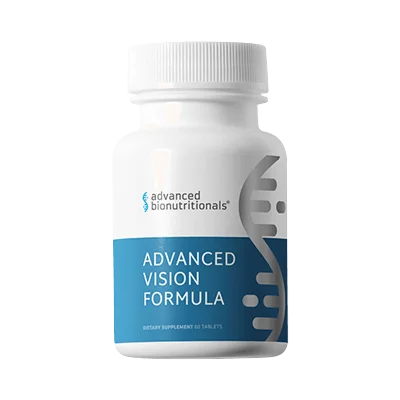
Advanced Vision Formula
An eye-support formula aimed at adults over 60 with tired, strained eyes. · Read our full review
from $57.95$69.95per bottle in the 6-pack
Check price on the official site →Official store · money-back guarantee
Everyday habits for healthy eyes
- Wear sunglasses that block UV and a hat outdoors.
- Do not smoke: smoking sharply raises the risk of macular degeneration and cataracts.
- Eat leafy greens several times a week.
- Keep blood pressure and blood sugar under control; both affect the small blood vessels in the eye.
- Improve lighting at home to read comfortably and prevent falls.
Keep reading
 Memory tips after 60
 Why am I so tired after 60?
 Nitric oxide after 60
Frequently asked questions
Why do my eyes get tired so easily after 60?
Drier eyes, a stiffer lens that has to work harder to focus, and needing more light all make eyes tire faster with age. Screens make it worse because we blink less. Breaks, lubricating drops and the right glasses usually help, but get an eye exam to rule out other problems.
What is the best vitamin for eyes after 60?
Lutein and zeaxanthin are the nutrients most concentrated in the macula. The AREDS2 formula is recommended by eye doctors for people with intermediate macular degeneration. Ask your eye doctor which, if any, supplement suits you.
How often should I get my eyes checked after 60?
The American Academy of Ophthalmology recommends a comprehensive dilated eye exam every one to two years after 65, or more often if your eye doctor advises.
Does the 20-20-20 rule really work?
It is a simple way to relax focusing muscles and remind yourself to blink. Many people find it reduces end-of-day eye strain.