 Vital

Collagen is the most abundant protein in your body. It gives skin its firmness, cushions joints, and forms the framework of bones, tendons and blood vessels. From our mid-twenties we make a little less every year, and after menopause women lose skin collagen especially quickly. Collagen supplements promise to help. Here is what the research actually says.
What happens to collagen as we age
- Production slows gradually from early adulthood.
- Menopause speeds it up: studies suggest women lose a large share of skin collagen in the first five years after menopause.
- Sun, smoking and high sugar intake damage existing collagen.
- Diet changes: we rarely eat collagen-rich foods such as skin, cartilage and bone broth.
The result is thinner, drier skin, more visible wrinkles, stiffer joints and more brittle nails.
Do collagen supplements work?
Swallowed collagen is broken down into small peptides and amino acids, so for years experts doubted it could reach the skin. Newer research shows some collagen peptides are absorbed intact and may signal skin and cartilage cells to make more of their own collagen.
Skin
This is where evidence is strongest. Several meta-analyses of randomized controlled trials found that taking collagen peptides for 8 to 12 weeks improved skin hydration and elasticity compared with placebo. Effects are modest, more "smoother and better hydrated" than "wrinkles gone".
Joints
Some trials found less joint discomfort in active adults and people with joint stiffness, using either collagen peptides (around 10 g) or small doses of undenatured type II collagen. Results are mixed, and collagen is not a treatment for arthritis.
Hair and nails
A few small studies reported stronger, faster-growing nails. Evidence for hair is limited.
Bones and muscle
Collagen is part of bone, and a few trials in postmenopausal women found small benefits for bone density markers. For muscle, collagen is an incomplete protein: it does not replace eggs, fish, dairy or meat, or an essential amino acid supplement.
Collagen types explained
| Type | Where it is found | Common source |
|---|---|---|
| Type I | Skin, bones, tendons (the most common) | Bovine, fish |
| Type II | Cartilage in joints | Chicken |
| Type III | Skin, blood vessels | Bovine |
| Type V | Hair, cell surfaces | Fish, eggshell membrane |
| Type X | Cartilage and bone growth | Eggshell membrane |
How to take collagen
- Dose: most skin studies used 2.5 to 10 g of hydrolyzed collagen peptides a day; joint studies often used about 10 g.
- Form: unflavored powder is the easiest to dose; stir it into coffee, tea, soup or a smoothie.
- Vitamin C: your body needs it to build collagen, so eat fruit and vegetables daily.
- Time: give it 8 to 12 weeks before judging.
- Protect what you have: daily sunscreen and not smoking matter more than any supplement.
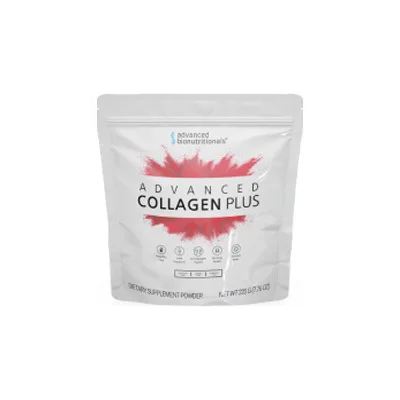
Advanced Collagen Plus
A multi-source collagen powder with types I, II, III, V and X plus biotin, in an 11 g daily scoop. · Read our full review
from $41.50$49.95per bottle in the 6-pack
Check price on the official site →Official store · money-back guarantee
How to choose a collagen supplement
- Look for hydrolyzed collagen peptides and a clear daily dose in grams.
- Choose sources that match your goal: bovine or fish for skin, chicken or eggshell membrane for joints, or a multi-source blend.
- Check for allergens (fish, egg) and that it suits your diet: collagen is never vegan.
- Be careful with very high biotin doses before blood tests; biotin can distort some lab results.
Keep reading
 Keeping muscle after 60
 Digestion after 60
 Is Advanced Bionutritionals legit?
Frequently asked questions
Is collagen worth taking after 60?
For skin hydration and elasticity, the evidence is reasonably good after 8 to 12 weeks. For joints, it may help some people. It is not a replacement for sunscreen, protein from food or medical treatment.
How much collagen should a 60-year-old take?
Most studies used 2.5 to 10 grams of hydrolyzed collagen peptides a day. Around 10 grams is a common choice for skin and joints together.
What type of collagen is best for seniors?
Types I and III support skin, and type II supports cartilage. A multi-source collagen covers several types at once.
Are there side effects of collagen?
Collagen is generally well tolerated. Some people notice mild fullness or digestive upset. Avoid sources you are allergic to, such as fish or egg.