 Vital
Most adults over 60 eat enough calories but not enough protein, and the gap gets wider every decade. That matters, because protein is what your body uses to keep the muscle that lets you climb stairs, carry groceries and stay steady on your feet. Here is how much you need, and how to get it without forcing down huge steaks.
The short answer
The official RDA is 0.8 g of protein per kilogram of body weight per day (about 0.36 g per pound). Many researchers now think that is too low for older adults. The PROT-AGE expert group recommends 1.0 to 1.2 g per kg for healthy adults over 65, and 1.2 to 1.5 g per kg for people who are active, recovering from illness or losing muscle.
| Body weight | RDA (0.8 g/kg) | Recommended after 60 (1.0–1.2 g/kg) |
|---|---|---|
| 130 lb (59 kg) | 47 g | 59–71 g |
| 160 lb (73 kg) | 58 g | 73–88 g |
| 190 lb (86 kg) | 69 g | 86–103 g |
| 220 lb (100 kg) | 80 g | 100–120 g |
If you have chronic kidney disease, ask your doctor first. Higher protein intakes are not recommended for everyone with reduced kidney function.
Why older muscles need more
With age, muscles respond less strongly to the protein you eat. Researchers call this "anabolic resistance". A 25-year-old may build muscle well from 20 g of protein at a meal; a 70-year-old typically needs closer to 30 to 40 g in one sitting to get the same response. That is why spreading protein out matters as much as the daily total.
Aim for 25–35 g at each meal
A typical American pattern is a small breakfast (toast, coffee), a medium lunch and a big dinner. Most of the protein lands at dinner. A better pattern is roughly equal amounts at breakfast, lunch and dinner.
| Food | Portion | Protein |
|---|---|---|
| Greek yogurt (plain) | 1 cup | 20–23 g |
| Cottage cheese | 1 cup | 25 g |
| Eggs | 3 large | 19 g |
| Chicken breast | 4 oz cooked | 35 g |
| Canned tuna or salmon | 1 can (5 oz) | 25–30 g |
| Lentils or beans | 1 cup cooked | 15–18 g |
| Milk | 1 cup | 8 g |
| Whey protein | 1 scoop | 20–25 g |
Easy ways to eat more protein
- Swap cereal for Greek yogurt with berries and nuts.
- Add an egg or cottage cheese to breakfast.
- Keep canned fish and rotisserie chicken in the fridge for quick lunches.
- Stir unflavored protein powder into oatmeal or soup.
- If your appetite is small, eat the protein part of your plate first.
- Have milk or a protein shake after a walk or a strength session.
Protein works best with strength training
Protein alone does not build much muscle. Combined with resistance exercise two or three times a week, it does. Even simple moves like chair stands, wall push-ups and resistance-band rows count. See our guide to keeping muscle after 60 for a starter routine.
When a supplement makes sense
Food comes first. A supplement can help if you have a small appetite, chew or digest meat poorly, or simply do not reach your target. Whey protein is the cheapest option. Essential amino acid (EAA) formulas are another: they deliver the building blocks in a small serving, with leucine as the key "on switch" for muscle protein synthesis.
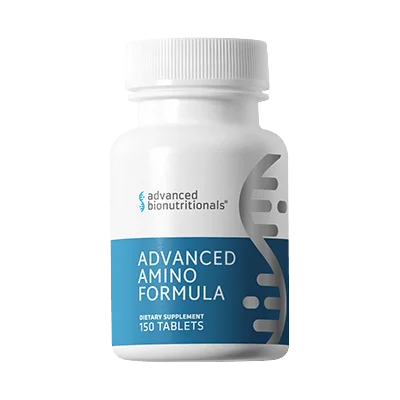
Advanced Amino Formula
An essential amino acid formula for adults who find it hard to eat enough protein from food. · Read our full review
from $33.25$39.95per bottle in the 6-pack
Check price on the official site →Official store · money-back guarantee
Keep reading
 Keeping muscle after 60
 Amino Formula vs Muscle Plus
 Why am I so tired after 60?
Frequently asked questions
Is 100 grams of protein a day too much for a senior?
For most healthy adults weighing about 180 lb or more, 100 g is within the recommended 1.0 to 1.2 g per kg range. It can be too much for people with advanced kidney disease, so check with your doctor if that applies.
What is the best protein for older adults?
Foods rich in leucine work well: dairy (especially whey), eggs, meat and fish. Plant eaters can combine soy, lentils and beans and may need slightly larger portions.
Can you build muscle after 70?
Yes. Studies in people in their 70s, 80s and even 90s show strength and muscle gains with resistance training and enough protein.
Should I eat protein before bed?
Some studies show that 30 to 40 g of slow-digesting protein such as cottage cheese before bed supports overnight muscle repair, especially on training days. It is optional, not essential.